
UHMW (Polyethylene W8 phân tử cực cao) thường là vật liệu tốt nhất cho ray trượt. Nhờ đặc tính ma sát thấp vượt trội (hệ số ma sát 0.05-0.10), khả năng chống mài mòn đặc biệt và đặc tính tự bôi trơn, Delrin mang lại độ ổn định kích thước và khả năng gia công tốt hơn cho các ứng dụng chính xác, trong khi HDPE cung cấp giải pháp tiết kiệm chi phí cho các hoạt động nhẹ hơn.
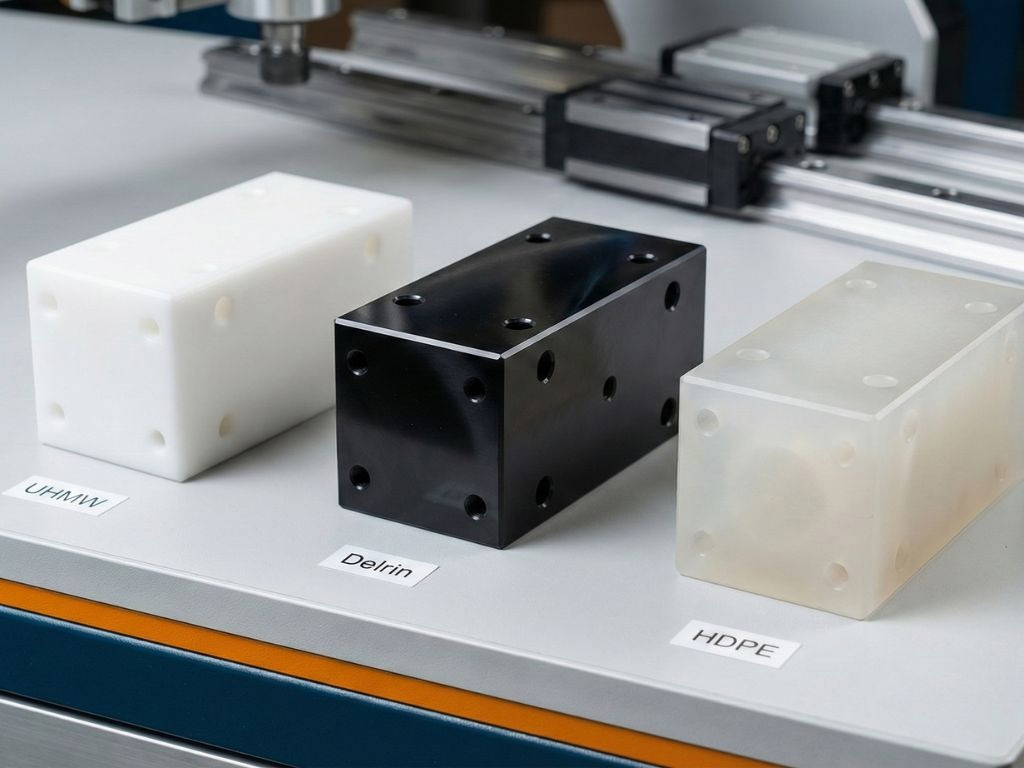
Việc lựa chọn vật liệu nhựa phù hợp cho ray trượt có ảnh hưởng trực tiếp đến hiệu suất, tuổi thọ và yêu cầu bảo trì của hệ thống. Máy định tuyến CNCCác hệ thống chuyển động tuyến tính và thiết bị sản xuất tự động. Việc lựa chọn giữa UHMW, Delrin và HDPE phụ thuộc vào yêu cầu ứng dụng cụ thể, bao gồm khả năng chịu tải, tốc độ, điều kiện môi trường và hạn chế về ngân sách.
Bản so sánh toàn diện này xem xét các đặc tính cơ học, đặc điểm hiệu suất và ứng dụng thực tiễn của 3 loại nhựa kỹ thuật này để giúp bạn đưa ra quyết định sáng suốt cho hệ thống ray trượt của mình.
Hiểu về vật liệu trượt ray
Cầu trượt ray là gì?
Ray trượt, còn được gọi là khối dẫn hướng hoặc khối đỡ, là các bộ phận giúp chuyển động tuyến tính trơn tru dọc theo trục. đường ray dẫn hướng Trong máy CNC và hệ thống chuyển động tuyến tính, các bộ phận này phải chịu được ma sát liên tục trong khi vẫn duy trì độ chính xác về kích thước và giảm thiểu sự mài mòn trên cả thanh trượt và ray dẫn hướng.
Định nghĩa vật liệu
• UHMW (Polyethylene W8 siêu phân tử cao): Một loại nhựa nhiệt dẻo cực kỳ bền chắc với khối lượng phân tử w8 nằm trong khoảng từ 3.5 đến 7.5 triệu đơn vị khối lượng nguyên tử, mang lại khả năng chống mài mòn vượt trội và ma sát thấp.
• Delrin (Acetal/POM): Tên thương hiệu của DuPont cho nhựa acetal (polyoxymethylene), một loại nhựa kỹ thuật có độ kết tinh cao, nổi tiếng về độ ổn định kích thước và khả năng gia công.
• HDPE (Polyethylene mật độ cao): Một loại polyetylen đa năng với mật độ từ 0.93 đến 0.97 g/cm³, có khả năng kháng hóa chất tốt và các đặc tính cơ học trung bình.
So sánh đặc tính vật liệu
| Bất động sản | UHW | Delrin (Acetal) | HDPE |
|---|---|---|---|
| Hệ số ma sát | 0.05 - 0.10 | 0.20 - 0.35 | 0.15 - 0.25 |
| Chịu mài mòn | Tuyệt vời (tốt hơn thép carbon từ 6-10 lần) | tốt | Trung bình đến tốt |
| Độ bền kéo | 3,000 - 5,500 psi | 8,800 - 10,000 psi | 3,100 - 4,500 psi |
| Độ cứng (Shod D) | 60 - 65 | 80 - 85 | 66 - 73 |
| Nhiệt độ hoạt động tối đa | 180°F (82 ° C) | 200 ° F (93 ° C) | 180°F (82 ° C) |
| Hấp thụ nước (24h) | 0.01% | 0.20 - 0.25% | 0.01% |
| Độ ổn định kích thước | Vừa phải (độ giãn nở nhiệt cao hơn) | Tuyệt vời (độ giãn nở nhiệt thấp) | Trung bình |
| Machinability | Khó (mềm, dễ bị vón cục) | Tuyệt vời (máy móc như kim loại) | tốt |
| Chi phí (Tương đối) | $$ - $$$ | $$$ - $$$$ | $ |
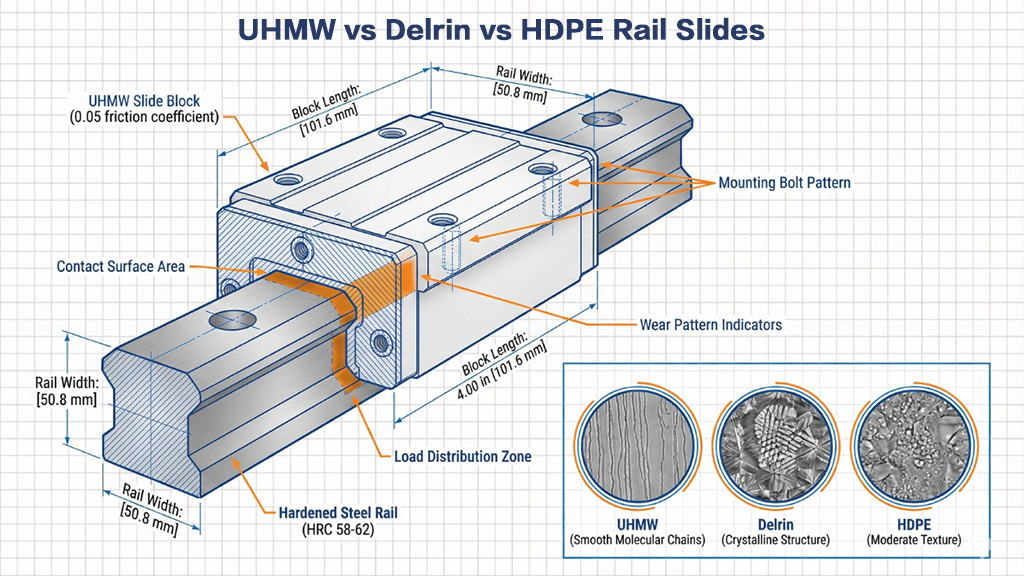
Phân tích vật liệu chuyên sâu
UHMW: Nhà vô địch về ma sát thấp
Đặc điểm hoạt độngCấu trúc phân tử của UHMW tạo ra một bề mặt cực kỳ trơn trượt với hệ số ma sát thấp hơn cả Teflon khi trượt trên thép. Đặc tính tự bôi trơn này làm giảm sự mài mòn trên cả thanh trượt và ray, kéo dài đáng kể khoảng thời gian bảo trì.
Ưu điểm chính:
• Khả năng chống mài mòn vượt trội - UHMW có độ bền gấp 6-10 lần so với thép carbon trong các ứng dụng ma sát.
• Độ ồn tối thiểu trong quá trình hoạt động nhờ đặc tính giảm rung.
• Khả năng kháng hóa chất đối với hầu hết các axit, bazơ và dung môi hữu cơ.
• Có các loại được FDA phê duyệt dành cho thiết bị chế biến thực phẩm.
• Hoạt động tốt trong môi trường bẩn mà không cần bôi trơn thường xuyên.
Những hạn chế cần xem xét:
• Độ bền kéo thấp hơn so với Delrin (3,000-5,500 psi so với 8,800-10,000 psi).
• Hệ số giãn nở nhiệt cao hơn đòi hỏi phải có sự bù trừ trong các ứng dụng đòi hỏi độ chính xác cao.
• Khó gia công - vật liệu mềm có thể làm kẹt dụng cụ cắt.
• Không thể dán bằng các loại keo dán thông thường.
• Biến dạng dẻo dưới tải trọng kéo dài ở nhiệt độ cao.
Ứng dụng tốt nhất: Nhiệm vụ nặng nề Các linh kiện máy phay CNCCác hệ thống chuyển động tuyến tính chu kỳ cao, đường ray băng tải và các ứng dụng yêu cầu bảo trì tối thiểu hoặc hoạt động trong môi trường ô nhiễm.
Delrin: Vật liệu mang lại hiệu suất chính xác cao
Đặc tính hiệu năng: Độ kết tinh cao của Delrin mang lại độ ổn định kích thước và độ cứng tuyệt vời, lý tưởng cho các ứng dụng đòi hỏi độ chính xác cao và dung sai chặt chẽ. Vật liệu này dễ gia công, tạo ra bề mặt nhẵn mịn mà không cần các công đoạn gia công bổ sung.
Ưu điểm chính:
• Độ ổn định kích thước vượt trội với hệ số giãn nở nhiệt thấp (hệ số 8.1 × 10⁻⁵ /°F).
• Khả năng gia công tuyệt vời cho phép tạo ra các hình dạng phức tạp và dung sai chặt chẽ.
• Độ cứng và độ bền kéo cao giúp chịu được tải trọng lớn hơn.
• Độ hút ẩm thấp (0.20-0.25%), đảm bảo độ chính xác về kích thước.
• Khả năng chống mỏi tốt cho các ứng dụng chuyển động lặp đi lặp lại.
• Độ bôi trơn tự nhiên giúp giảm ma sát mà không cần chất bôi trơn bên ngoài.
Những hạn chế cần xem xét:
• Hệ số ma sát cao hơn (0.20-0.35) so với UHMW.
• Đắt hơn cả UHMW và HDPE.
• Dễ bị phân hủy bởi axit và bazơ mạnh.
• Có thể trở nên giòn ở nhiệt độ dưới -40°F (-40°C).
• Phân hủy do tia UV khi không sử dụng chất ổn định.
Ứng dụng tốt nhất: Độ chính xác máy CNC dành cho người chơi sở thích, các thiết bị đo lường yêu cầu độ ổn định về kích thước, các ứng dụng có yêu cầu dung sai chặt chẽ và các hệ thống mà độ cứng ngăn ngừa sự biến dạng dưới tải trọng.
HDPE: Lựa chọn tiết kiệm chi phí
Đặc tính hiệu năng: HDPE mang lại sự cân bằng giữa các đặc tính cơ học và hiệu quả chi phí, làm cho nó phù hợp với các ứng dụng có yêu cầu về hiệu năng ở mức độ vừa phải và ngân sách hạn chế đáng kể.
Ưu điểm chính:
• Chi phí thấp nhất trong số 3 loại vật liệu (thường là 40-60% (ít hơn UHMW).
• Khả năng kháng hóa chất tốt đối với axit, rượu và bazơ.
• Độ bền va đập tuyệt vời ở nhiệt độ thấp.
• Có các loại được FDA phê duyệt để tiếp xúc với thực phẩm.
• Dễ chế tạo và gia công.
• Lightw8 với mật độ 0.93-0.97 g/cm³.
Những hạn chế cần xem xét:
• Khả năng chống mài mòn trung bình - kém hơn UHMW trong các ứng dụng trượt.
• Hệ số ma sát càng cao thì cần bôi trơn thường xuyên hơn.
• Độ bền kéo thấp hơn làm hạn chế khả năng chịu tải.
• Dễ bị nứt do ứng suất trong một số môi trường hóa học nhất định.
• Phân hủy do tia UV khi không sử dụng chất ổn định.
Ứng dụng tốt nhấtỨng dụng trong: Hệ thống chuyển động tuyến tính tải nhẹ, phát triển nguyên mẫu, thiết bị giáo dục và các ứng dụng mà chi phí là yếu tố ưu tiên hàng đầu so với hiệu suất tối đa.
Hiệu suất trong các ứng dụng thực tế
Hiệu suất ma sát và mài mòn
Thử nghiệm thực địa trong môi trường công nghiệp Hệ thống CNC ATC tuyến tính Cho thấy sự khác biệt đáng kể về hiệu năng:
| Tham số thử nghiệm | UHW | Delrin | HDPE |
|---|---|---|---|
| Tỷ lệ hao mòn (mm³/Nm) | 1.0 × 10⁻⁶ | 3.5 × 10⁻⁶ | 5.2 × 10⁻⁶ |
| Tuổi thọ sử dụng (số chu kỳ ở tải trọng 500N) | 500,000 + | 200,000-300,000 | 100,000-150,000 |
| Khoảng thời gian bảo trì | 6-12 tháng | 3-6 tháng | 1-3 tháng |
| Độ ồn (dB) | 45-50 | 55-60 | 60-65 |
Cân nhắc về khả năng chịu tải
Mặc dù UHMW vượt trội trong việc giảm ma sát, nhưng độ bền kéo và mô đun đàn hồi cao hơn của Delrin khiến nó phù hợp hơn cho các ứng dụng chịu tải trọng cao:
• Hàng hóa nhẹ (dưới 100 lbs)Cả 3 loại vật liệu đều hoạt động tốt; HDPE mang lại lợi ích tiết kiệm chi phí.
• Tải trọng trung bình (100-500 lbs)Nên chọn UHMW hoặc Delrin; UHMW có độ bền cao hơn.
• Hàng hóa nặng (trên 500 lbs)Delrin được ưa chuộng vì độ cứng và khả năng chống biến dạng.
• Tải trọng tác độngĐộ bền va đập vượt trội của UHMW giúp ngăn ngừa nứt vỡ dưới tác động của tải trọng va đập.
Hiệu suất môi trường
Môi trường hoạt động ảnh hưởng đáng kể đến việc lựa chọn vật liệu. Ứng dụng CNC chính xác:
• Môi trường bụi bẩnTính chất tự bôi trơn của UHMW giúp ngăn ngừa sự nhiễm bẩn ảnh hưởng đến hiệu suất.
• Độ ẩm caoUHMW và HDPE có khả năng chống hút ẩm tốt hơn Delrin.
• Phơi nhiễm hóa chấtUHMW có khả năng kháng hóa chất rộng nhất; Delrin dễ bị ăn mòn bởi axit/bazơ mạnh.
• Biến động nhiệt độDelrin duy trì kích thước tốt hơn trong phạm vi nhiệt độ khác nhau.
• Ứng dụng ngoài trờiCả 3 loại đều cần chất ổn định tia UV; Delrin và HDPE dễ tìm mua hơn với khả năng chống tia UV.
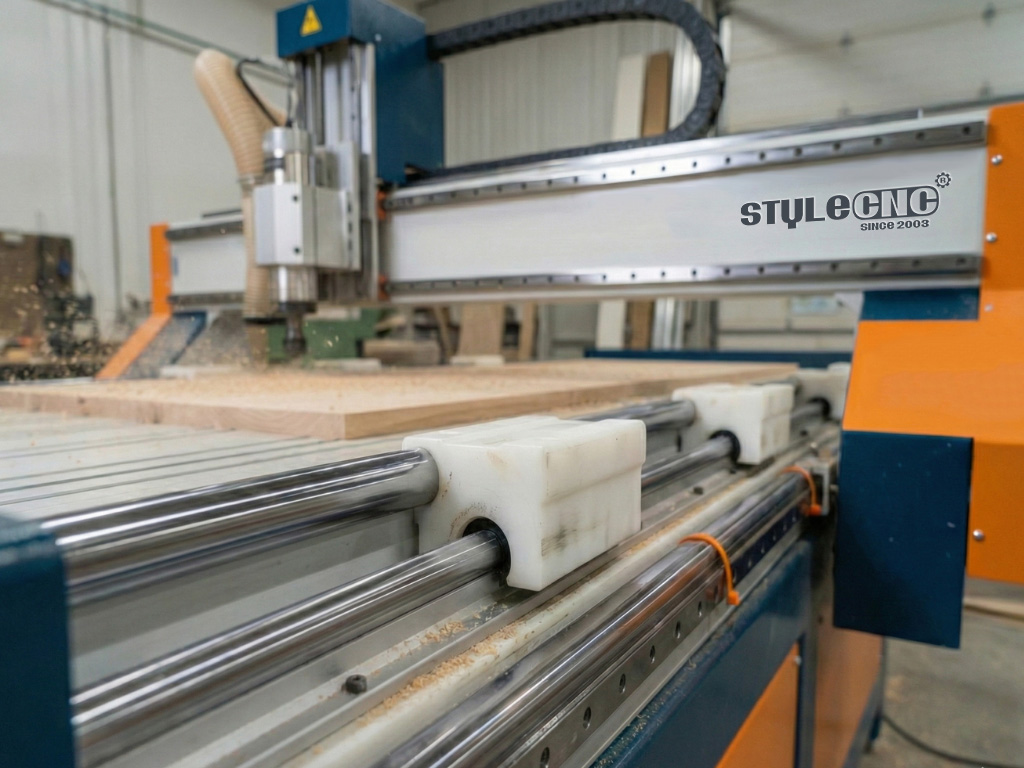
Lựa chọn vật liệu theo ứng dụng cụ thể
Ứng dụng của máy định tuyến CNC
Những yêu cầu của Chất lượng và độ chính xác của máy phay CNC Cần cân nhắc kỹ lưỡng về mặt vật liệu:
Ray trượt giàn giáo
• Khuyến nghị: UHMW.
• Hoạt động ở chu kỳ cao mang lại lợi ích nhờ ma sát thấp và khả năng chống mài mòn.
• Giảm thời gian ngừng hoạt động để bảo trì trong môi trường sản xuất.
• Giảm rung động giúp cải thiện chất lượng bề mặt hoàn thiện.
Trượt trục Z
• Đề xuất: Delrin.
• Tải trọng thẳng đứng đòi hỏi độ cứng cao hơn để tránh biến dạng.
• Độ ổn định kích thước giúp duy trì độ chính xác của chiều sâu cắt.
• Độ biến dạng dẻo tối thiểu dưới tải trọng thẳng đứng liên tục.
Các thành phần trục quay
• Khuyến nghị: UHMW.
• Sự quay liên tục mang lại lợi ích nhờ đặc tính tự bôi trơn.
• Giảm ma sát giúp giảm tải cho động cơ và tiết kiệm năng lượng.
• Rất phù hợp cho các phụ kiện quay 4 trục và 5 trục.
Ứng dụng sản xuất công nghiệp
Hệ thống băng tải
• UHWThích hợp nhất cho các hoạt động sản xuất khối lượng lớn với vật liệu mài mòn.
• HDPEThích hợp cho việc vận chuyển hàng hóa nhẹ, nơi yếu tố chi phí là quan trọng.
Thiết bị đóng gói
• DelrinYêu cầu về độ chính xác trong các hoạt động chiết rót và niêm phong.
• UHWCác lựa chọn bao bì thực phẩm đạt tiêu chuẩn an toàn thực phẩm và tuân thủ quy định của FDA.
Vật liệu
• UHWỨng dụng trong các ngành công nghiệp nặng với tải trọng va đập.
• DelrinĐịnh vị chính xác trong hệ thống lưu trữ tự động.
Phân tích tổng chi phí sở hữu
Chi phí vật liệu ban đầu chỉ chiếm một phần trong tổng chi phí sở hữu. Phân tích toàn diện bao gồm chi phí lắp đặt, bảo trì và thay thế trong suốt vòng đời của linh kiện:
Phân tích chi phí (Tính theo mét dài cho thanh ray trượt 1" × 1")
| Yếu tố chi phí | UHW | Delrin | HDPE |
|---|---|---|---|
| Chi phí vật liệu (mỗi foot vuông) | $ 12-18 | $ 20-30 | $ 6-10 |
| Thời gian gia công | Cao (chất liệu mềm) | Thấp (khả năng gia công tuyệt vời) | Trung bình |
| Tuổi thọ mong đợi | 3-5 năm | 2-3 năm | 1-2 năm |
| Tần suất bảo trì | Một năm hai lần | hàng quý | Hàng tháng - Hai tháng một lần |
| Tổng chi phí 5 năm | $ 80-120 | $ 120-180 | $ 90-150 |
Điểm mấu chốt: Mặc dù HDPE có chi phí ban đầu thấp nhất, nhưng việc thay thế và bảo trì thường xuyên có thể dẫn đến tổng chi phí cao hơn trong 5 năm so với UHMW trong các ứng dụng sử dụng nhiều.
Thực hành tốt nhất về cài đặt và bảo trì
Hướng dẫn cài đặt
Lắp đặt đúng cách sẽ kéo dài tuổi thọ sản phẩm bất kể chất liệu nào được sử dụng. Hãy làm theo hướng dẫn. Thực hành bảo trì CNC tốt nhất:
Chuẩn bị bề mặt
• Làm sạch kỹ lưỡng bề mặt đường ray, loại bỏ bụi bẩn, dầu mỡ và lớp oxy hóa.
• Kiểm tra độ thẳng của ray trong phạm vi sai số 0.002 inch trên mỗi foot đối với các ứng dụng đòi hỏi độ chính xác cao.
• Loại bỏ các cạnh sắc nhọn có thể làm rách các thanh trượt bằng nhựa.
• Bôi một lớp màng bôi trơn mỏng lên ray trước khi lắp đặt lần đầu.
Gắn trượt
• Cần chừa khoảng giãn nở nhiệt: 0.010 inch/foot đối với UHMW, 0.005 inch đối với Delrin.
• Sử dụng vòng đệm phẳng để phân bổ lực kẹp đều.
• Siết chặt các ốc vít theo đúng thông số kỹ thuật của nhà sản xuất để tránh bị siết quá chặt.
• Lắp đặt các thanh trượt có độ cong tự nhiên (nếu có) hướng ra xa khỏi ray.
Lịch bảo trì
Bảo trì UHMW
• Hàng thángKiểm tra bằng mắt thường để phát hiện các vết sứt, nứt hoặc mài mòn quá mức.
• hàng quýLàm sạch các mảnh vụn tích tụ trên bề mặt đường ray và cầu trượt.
• Hai năm một lầnNên bôi trơn nhẹ nếu vận hành trong môi trường khô.
• Hàng nămĐo độ dày của thanh trượt; thay thế khi bị mòn. 30% Hoặc nhiều hơn.
Bảo trì Delrin
• Hàng thángKiểm tra xem có sự thay đổi kích thước do hút ẩm hay không.
• hàng quýLàm sạch và kiểm tra xem có vết nứt hoặc dấu hiệu ứng lực nào trên bề mặt không.
• hàng quýSử dụng chất bôi trơn khô (dạng xịt PTFE) để giảm ma sát.
• Hai năm một lầnKiểm tra độ chính xác về kích thước bằng phép đo chính xác.
Bảo trì HDPE
• Hai tuầnKiểm tra trực quan về độ mòn và biến dạng.
• Hàng thángLàm sạch và bôi trơn bằng dầu nhẹ.
• hàng quýThay thế các slide có dấu hiệu mòn hoặc bị biến dạng.
Câu Hỏi Thường Gặp
Tôi có thể sử dụng HDPE thay vì UHMW để tiết kiệm chi phí được không?
HDPE có thể thay thế UHMW trong các ứng dụng tải nhẹ với tải trọng dưới 100 pound và sử dụng không thường xuyên. Tuy nhiên, hệ số ma sát cao hơn và khả năng chống mài mòn thấp hơn của HDPE sẽ đòi hỏi việc thay thế và bảo trì thường xuyên hơn, có thể làm mất đi lợi ích tiết kiệm chi phí ban đầu trong các ứng dụng có chu kỳ hoạt động cao.
Tại sao Delrin lại đắt hơn UHMW?
Chi phí cao hơn của Delrin phản ánh quy trình sản xuất phức tạp của nó, bao gồm nguyên liệu đầu vào có độ tinh khiết cao và kiểm soát quá trình trùng hợp chính xác. Độ ổn định kích thước, khả năng gia công và các đặc tính cơ học vượt trội của vật liệu này оправдывает mức giá cao hơn trong các ứng dụng đòi hỏi dung sai chặt chẽ và độ cứng vững.
Làm thế nào để ngăn chặn UHMW làm tắc nghẽn dụng cụ cắt của tôi?
Sử dụng các dụng cụ bằng thép tốc độ cao hoặc cacbua sắc bén với góc thoát phôi dương. Duy trì tốc độ cắt cao (500-800 sfm) với lượng tiến dao nhỏ. Sử dụng chất làm mát hoặc khí nén để liên tục loại bỏ phôi vụn. Cân nhắc sử dụng các dụng cụ được thiết kế đặc biệt cho nhựa với rãnh cắt được đánh bóng.
Vật liệu nào chịu được sự thay đổi nhiệt độ tốt nhất?
Delrin mang lại độ ổn định kích thước tốt nhất trên nhiều dải nhiệt độ nhờ hệ số giãn nở nhiệt thấp (8.1 × 10⁻⁵ /°F so với 11 × 10⁻⁵ /°F của UHMW). Tuy nhiên, cả 3 vật liệu đều cần có dung sai giãn nở trong các ứng dụng chính xác có sự thay đổi nhiệt độ đáng kể.
Những vật liệu này có thể sử dụng ngoài trời được không?
Cả 3 loại vật liệu đều bị phân hủy dưới tác động của tia cực tím nếu không có chất ổn định. Các loại có chất ổn định tia cực tím hiện có sẵn cho Delrin và HDPE. UHMW vốn dĩ có khả năng chống tia cực tím tốt hơn, nhưng vẫn nên sử dụng các phiên bản có chất ổn định khi tiếp xúc lâu dài với môi trường ngoài trời. Các loại có chứa muội than mang lại khả năng bảo vệ tia cực tím tốt nhất cho tất cả các vật liệu.
Ray dẫn hướng thường có tuổi thọ bao lâu trong các ứng dụng CNC thông thường?
Tuổi thọ dự kiến thay đổi đáng kể tùy thuộc vào tải trọng, tốc độ và bảo trì. UHMW thường có tuổi thọ 3-5 năm trong môi trường sản xuất CNC với hoạt động 8 giờ mỗi ngày. Delrin có tuổi thọ 2-3 năm trong điều kiện tương tự. HDPE cần được thay thế sau mỗi 1-2 năm. Bảo trì đúng cách và lựa chọn vật liệu phù hợp với ứng dụng có thể kéo dài thời gian này thêm 30%.50%.
Vật liệu ray (thép so với nhôm) có ảnh hưởng đến việc lựa chọn máng trượt bằng nhựa không?
Đúng vậy. Ray thép tôi cứng kết hợp tốt nhất với UHMW hoặc Delrin do khả năng chống mài mòn vượt trội của ray. Ray nhôm mềm hơn và có thể bị mài mòn do các loại nhựa cứng hơn như Delrin. Đối với ray nhôm, UHMW được ưa chuộng hơn vì ma sát thấp hơn giúp giảm mài mòn ray. Ray nhôm mạ anod hoạt động tốt hơn với bất kỳ vật liệu trượt bằng nhựa nào.
Tôi có thể trộn các loại vật liệu trên cùng một máy không?
Việc kết hợp các vật liệu khác nhau là chấp nhận được và đôi khi còn mang lại lợi ích. Ví dụ, sử dụng Delrin cho trục Z để tăng độ cứng trong khi sử dụng UHMW cho trục X và Y để giảm ma sát sẽ tối ưu hóa hiệu suất. Đảm bảo tất cả các thanh trượt có đặc tính ma sát tương tự nhau để tránh mài mòn không đều và các vấn đề về chuyển động.
Đưa ra quyết định cuối cùng của bạn
Việc lựa chọn vật liệu cho ray trượt đòi hỏi phải cân bằng giữa yêu cầu về hiệu suất, điều kiện môi trường và hạn chế về ngân sách. Mỗi loại vật liệu đều có ưu điểm riêng trong các ứng dụng cụ thể:
Hãy chọn UHMW khi:
• Ma sát thấp và độ mài mòn tối thiểu là những ưu tiên hàng đầu.
• Làm việc trong môi trường nhiều bụi, ô nhiễm hoặc ngoài trời.
• Hoạt động chu kỳ cao đòi hỏi khoảng thời gian bảo trì kéo dài.
• Giảm tiếng ồn rất quan trọng đối với sự thoải mái của người vận hành.
• Đặc tính tự bôi trơn giúp giảm độ phức tạp trong bảo trì.
Hãy chọn Delrin khi:
• Độ ổn định và độ chính xác về kích thước là vô cùng quan trọng.
• Tải trọng lớn hơn đòi hỏi độ cứng và sức chịu lực cao hơn.
• Phải duy trì dung sai chặt chẽ theo thời gian.
• Các hình dạng phức tạp được hưởng lợi từ khả năng gia công tuyệt vời.
• Hoạt động trong môi trường có nhiệt độ và độ ẩm được kiểm soát.
Chọn HDPE khi:
• Ngân sách là yếu tố hạn chế chính.
• Ứng dụng cho các công việc nhẹ, yêu cầu độ mài mòn tối thiểu.
• Việc phát triển nguyên mẫu đòi hỏi thử nghiệm với chi phí thấp.
• Việc dễ dàng tìm mua và có kích thước hàng tồn kho tiêu chuẩn là rất quan trọng.
• Việc thay thế thường xuyên là điều chấp nhận được trong lịch bảo trì.
Đối với hầu hết các ứng dụng CNC công nghiệp, UHMW mang lại sự cân bằng tối ưu giữa hiệu suất và độ bền. Các ứng dụng chính xác được hưởng lợi từ tính ổn định kích thước của Delrin, trong khi HDPE phù hợp với các trường hợp tiết kiệm chi phí hoặc ứng dụng nhẹ. Việc lắp đặt đúng cách, bảo trì thường xuyên và lựa chọn vật liệu phù hợp đảm bảo hiệu suất chuyển động tuyến tính đáng tin cậy trong nhiều năm.
Khi nâng cấp hoặc bảo trì thiết bị CNC, hãy tham khảo ý kiến của nhà cung cấp vật liệu hoặc nhà sản xuất máy móc để xác minh khả năng tương thích vật liệu và thông số kỹ thuật tối ưu cho các yêu cầu ứng dụng cụ thể của bạn.